Next Date
COMING SOON
Schedule: 03:00 p.m to 04:00 p.m
Location: LIST, 41, rue du Brill - L-4422 Belvaux
Attendance either virtual of physical.

Alexandros GERAKIS
Envoyer un e-mailAbout the Seminars on Materials & Research Technology
The sMaR&T Seminar Series is designed to connect researchers at the Luxembourg Institute of Science and Technology (LIST) and across Luxembourg with leading international experts.
Drawing on experience from previous edition, the seminars goes beyond traditional lectures. It creates a dynamic setting that encourages informal, yet impactful, discussions between visiting speakers and the local research community. These interactions often lead to cross-disciplinary inspiration and, in many cases, the seed of new collaborative projects.
⇒ Dive into last edition’s program
A Format Designed for Exchange The strength of the Seminar Series lies in its structure, which prioritizes personal interaction and networking opportunities alongside the lecture itself. Each seminar day includes a range of touchpoints for researchers to connect with the guest speaker
One-on-One Meetings Researchers from LIST and other institutions can request individual 30- or 60-minute meetings with the speaker via the seminar registration form. These focused conversations allow for in-depth exploration of shared research interests and strengthen international visibility for Luxembourg’s scientific output.
Networking Opportunities Participants with existing engagement (via a tour or one-on-one meeting) are invited to informal social gatherings such as a working lunch, dinner, or guided visits to key locations like Belval or Luxembourg City. These events not only deepen scientific dialogue but also showcase Luxembourg’s growing role as a hub of innovation and research excellence.
Prof Ali Mesbah | Department of Chemical and Biomolecular Engineering, University of California Berkeley | |
|---|---|
Short Biography | Ali Mesbah is Associate Professor of Chemical and Biomolecular Engineering at the University of California at Berkeley. Before joining UC Berkeley, Dr. Mesbah was a senior postdoctoral associate at MIT. He holds a Ph.D. degree in Systems and Control and a Master’s degree in Chemical Engineering, both from Delft University of Technology. Dr. Mesbah is a senior member of the IEEE and AIChE. He serves on the Editorial Boards of the IEEE Transactions on Control Systems Technology, IEEE Control Systems Letters, and IEEE Transactions on Radiation and Plasma Medical Sciences. Dr. Mesbah is recipient of the O. Hugo Schuck Best Paper Award in 2024, the Alexander von Humboldt Research Award in 2023, the Best Application Paper Award of the IFAC World Congress in 2020, the AIChE's 35 Under 35 Award in 2017, the IEEE Control Systems Outstanding Paper Award in 2017, and the AIChE CAST W. David Smith, Jr. Publication Award in 2015. His research interests lie at the intersection of optimal control, machine learning, and applied mathematics, with applications to learning-based analysis, optimization, and predictive control of materials processing and manufacturing systems. |
| Topic | A low-temperature plasma is a partially ionized gas in which electrons have significantly higher energy than the heavier ions and neutral species,forming a non-equilibrium state of matter. Interactions between low-temperature plasmas and complex material interfaces underpin a broad range of transformative technologies, including plasma medicine, sustainable chemical synthesis, and the fabrication of next-generation nanoelectronics and quantum information science devices. Despite their technological importance, predictive control of plasma–material interactions remains a fundamental challenge. These interactions span multiple length and time scales—from electron-driven chemistry to atomic-scale surface modifications—yet remain poorly understood at a mechanistic level. In this seminar, I will discuss recent advances at the intersection of scientific machine learning and systems theory that enable new approaches to multiscale modeling and control of low-temperature plasmas. I will present a learning-assisted systems framework that integrates physics-based models with data-driven methods to efficiently capture and control atomic-scale plasma–surface processes. Applications to plasma-based nanoelectronics fabrication will be highlighted, illustrating how this approach can enable predictive and adaptive control of plasma–material interactions. More broadly, this talk will demonstrate how systems-level thinking, machine learning, and concepts from optimal control can be leveraged to address long-standing challenges in low-temperature plasma processing. |
| Registration | 18 May 2026 | 03:00 p.m to 04:00 p.m
|
Prof Georgios A. SOTIRIOU | SciLifeLab, Department of Chemistry, Stockholm University, Sweden | |
|---|---|
Short Biography | Professor Georgios A. Sotiriou is a leader in nanomedicine research and Full Professor at SciLifeLab and the Department of Chemistry, Stockholm University, where he heads the Bionanomaterial Technology Laboratory. His research integrates nanoparticle engineering, biomaterials, and biomedical applications to develop advanced nanomaterials and nano-enabled devices for sensing, antimicrobial technologies, wound care, and drug delivery. He received his Diploma in Applied Mathematical and Physical Sciences from the National Technical University of Athens, followed by MSc and Dr.Sc. degrees from ETH Zurich, and postdoctoral training at Harvard University and ETH Zurich. His work has been recognized by distinctions including the Smoluchowski Award and the ETH Medal for Outstanding PhD Thesis, and supported by major competitive grants such as an ERC Starting Grant, two ERC Proof of Concept Grants, and a Swedish Research Council Consolidator Grant. |
| Topic | Flame aerosol technology has emerged as a highly scalable and reproducible manufacturing route for engineering high-value nanomaterials [1]. This talk highlights our recent advances in developing flame-made nanoparticles tailored for cutting-edge biomedical applications, focusing on diagnostics, antimicrobial strategies, and smart therapeutic platforms. First, we explore the precise structural engineering of plasmonic nanoaggregates. By fine-tuning interparticle distances during aerosol self-assembly [2], we achieve highly uniform surface-enhanced Raman scattering (SERS) substrates for rapid diagnostics [3,4], alongside robust silver nanoparticle-based colorimetric sensors for bedside hyperammonemia detection [5]. Second, we present multifaceted approaches to combatting bacterial biofilms and medical device infections. These include in situ deposited nanostructured implant coatings utilizing Ag-bioglass [6] and pH-triggered Ag/Au nanoalloys [7], durable visible-light photocatalytic titanium suboxide nanocomposites [8], and superhydrophobic polymeric coatings to prevent biofouling [9]. Finally, we demonstrate the integration of flame-made nanomaterials into advanced delivery systems. Key examples include hybrid near-infrared photothermal microneedles utilizing plasmonic nanoaggregates for the synergistic eradication of methicillin-resistant S. aureus (MRSA) [10], and the one-step synthesis of amorphous CaP-SiO₂ nanoparticles with tunable immunogenicity [11]. Ultimately, this presentation illustrates how the precision and scalability of flame synthesis can accelerate the clinical translation of next-generation nanomedicines. |
| Registration | 28 April 2026 | 03:00 p.m to 04:00 p.m
|
 |
Dr. Thierry BELMONTE | Institut Jean Lamour, CNRS and Université de Lorraine, 54011 Nancy, France |
|---|---|
Short Biography | Thierry Belmonte was born on July 6, 1967 near Lyon, France. After two years of preparatory classes in the same city, he entered an engineering school in Grenoble, and obtained his Master in surface science and a degree in economic science before completing his thesis on the development of silicon carbide nanowires. He joined the CNRS as a research fellow in 1993 and was promoted to research director in 2006. He was deputy director of the Institut Jean Lamour, a laboratory of 500 people in Nancy, from 2009 to 2012 and then director from 2018 to 2022. Co-founder of a laboratory without walls with Patrick Choquet in Luxembourg between 2010 and 2017 on the theme of plasma-surface interaction, Thierry Belmonte works on the synthesis of nanomaterials by discharges in liquids, mainly for applications in the energy field. Author of more than 230 publications in international peer-reviewed journals, he was awarded the first research prize of the Lorraine Region, the Jean RIST Prize of the French Society of Metallurgy and Materials and the bronze medal of the CNRS. |
| Topic | Recent discoveries have revealed that metal nanoalloys exhibit unexpected and remarkable optical properties. The ability to generate complex harmonics through ultrafast optical excitation opens a wide range of potential applications based on these phenomena, many of which have only recently begun to be explored. A key challenge now lies in producing such alloys on the nanometric scale with precise control over their dimensions, composition, and structure. Pronounced quantum effects emerge at sizes of only a few nanometres due to electron confinement within nanoscale dots. Yet, novel and previously unobserved phenomena can also appear in larger structures ranging from ten to one hundred nanometres. For instance, using materials such as gold and silicon to form sponge-like architectures enables synergistic interactions between plasmonic and semiconducting components [1]. Comparable effects, however, have also been reported in fully metallic nanostructures, including those based on high-entropy alloys [2]. To better understand how the mixing of metallic elements influences the optical properties of nanoalloys, our research aims to determine the synthesis conditions required to produce nanoparticles composed of two or three immiscible metals via liquid discharge methods. These processes allow ultrafast and cost-effective production but require specific conditions for alloy formation. First, the element sources must be highly localized, which can be achieved by using materials in which the metals are already intimately mixed. Second, the discharge must generate vaporization conditions fast enough to prevent one element from remaining liquid while another becomes gaseous. The difference in metal melting points must be smoothed over. Finally, quenching must occur at a sufficiently rapid rate to avoid segregation into liquid and solid phases. At present, these constraints make it difficult to produce a single homogeneous type of nanoparticle from immiscible elements. Composition gradients often lead to the formation of undesirable reaction products, which tend to dominate the resulting material. Nevertheless, metallic nanoalloys can be obtained from immiscible elements using nanosecond-scale pulsed discharges, when thin films produced by magnetron sputtering are employed as the electrode material. While the mechanisms underlying element vaporization and ultrafast heating in this configuration are relatively well understood, the quenching processes remain less clear and are still the subject of investigation. These aspects will be illustrated through examples. Furthermore, we will discuss alternative synthesis routes to plasma-based methods, with the goal of improving control over size, geometry, structure, and composition, and ultimately achieving more reproducible nanomaterial production. Finally, we will briefly describe AI approaches used to substitute elements and evaluate the benefits and drawbacks associated with the selection of alternative materials. [1] A.V. Nomine et al. "FeAu mixing for high-temperature control of light scattering at the nanometer scale", Nanoscale,16 (2024) 2289-2294 [2] A. Nomine et al. Optical responses from High Entropy Alloys: experimental results and perspectives. Faraday Discussions, (2025) accepted. |
| Registration | Tuesday 24th March 2026
|
 |
Dr. Karsten Wegner | CEO, ParteQ GmbH | D-76316 Malsch, Germany
|
|---|---|
Short Biography | Dr. Karsten Wegner is co-founder and CEO of ParteQ GmbH (Rastatt, Germany) which is active in aerosol and particle technology, offering measurement and synthesis services, equipment and even turnkey flame spray systems to customers worldwide. Prior to ParteQ´s foundation in 2016, Karsten was engaged in spin off companies FlamePowders (Zurich, Switzerland) and Tethis (Milan, Italy) and has worked as a technical consultant in the field. Throughout these years, Karsten has kept tight links with ETH Zurich, where he obtained a PhD for his research on gas-phase synthesis of nanoparticles with Prof. Sotiris E. Pratsinis in 2002. Karsten holds a diploma in process engineering from the Karlsruhe Institute of Technology (KIT, Germany). |
| Topic | Flame Spray Pyrolysis (FSP) is a versatile and scalable process for continuous production of nanoparticles. Liquid precursors of almost any element of the periodic table can be transformed into single and multicomponent oxide, phosphate, or even sulfide nanoparticles within milliseconds at flame temperatures up to 3000°C. Product powders find applications in catalysis, energy storage and conversion, polymer-nanocomposites or the biomedical field, among many others. Flame Spray Pyrolysis and its applications have been intensively studied and developed at ETH Zurich since the turn of the century and are now applied by a growing research community worldwide. Sparked by the enthusiasm of the early gold rush days, ETH researchers Wendelin Stark and Karsten Wegner founded the spin-off “FlamePowders” aiming at the commercialization of FSP-made nanopowders. What has become of this endeavor 20 years later? Dr. Wegner will lay out his journey bridging entrepreneurship and research at ETH, where he has been a lecturer and senior scientist until June last year. |
| Registration | Wednesday 25 February 2026 03:00 pm to 04:00 pm
|
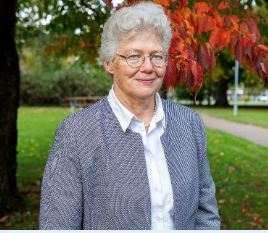
Prof. Dr. Anne L'Huillier | LUND UNIVERSITY | Division of Atomic Physics | |
|---|---|
Short Biography | Anne L'Huillier is a Swedish/French researcher in attosecond science. During the first part of her career, she worked at the Commissariat à l'Energie Atomique et aux Énergies Alternatives, in Saclay, France, first as a PhD student until 1986, then as a permanent researcher. In 1995, she moved to Lund University in Sweden and became a full professor in 1997. Her research, both theoretical and experimental, is centered on high-order harmonic generation in gases and its applications, particularly in attosecond science. She was awarded the Nobel Prize in Physics 2023 together with Pierre Agostini and Ferenc Krausz “for experimental methods that generate attosecond pulses of light for the study of electron dynamics in matter |
| Topic | When an intense laser interacts with a gas of atoms, high-order harmonics are generated. In the time domain, this radiation forms a train of extremely short light pulses, of the order of 100 attoseconds. Attosecond pulses allow the study of the dynamics of electrons in atoms and molecules, using pump-probe techniques. This presentation will highlight some of the key steps of the field of attosecond science. |
| Registration | Tuesday 03rd February 2026 03:00 pm to 04:00 pm
|
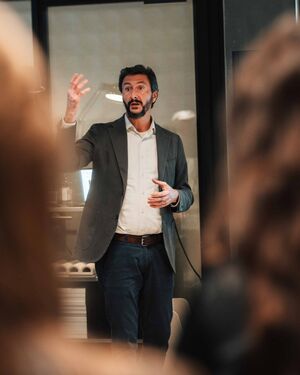 | Massimo Gatelli Head of Material Research | IMPACT ACOUSTIC |
| Abstract | This seminar will explore how technical expertise and innovative thinking can be transformed into successful business ventures. Drawing on experiences in industrial research and entrepreneurship, we will discuss strategies for moving from concept to market-ready solutions, including identifying opportunities, managing technology transfer, and creating spin-offs. The session will highlight practical lessons learned from founding and scaling companies, navigating IP transfer, and building partnerships. |
| Biography | Massimo Gatelli is Head of Material Research at Impact Acoustic, where he leads innovation in sustainable acoustic solutions. He was the co-founder and former CEO of Milleforma, a R&D company focused on natural and sustainable materials, which successfully exited through an IP transfer to Impact Acoustic. Before that, Massimo co-founded and managed Tethis, a biotech company specializing in advanced surface technologies for diagnostic applications, guiding it from start-up phase through growth and industrialization. His career spans industrial R&D and entrepreneurship, with extensive experience in material innovation and its application in different technology fields. Massimo brings a unique perspective on how technical knowledge can be leveraged to create impactful businesses and is passionate about sustainability, innovation, and bridging science with industry. |
| Registration | 09 December 2025 |
 | Dr. Diana Mihailova Eindhoven University of Technology |
| Abstract | This seminar introduces Plasma Matters, a company that grew out of plasma research at Eindhoven University of Technology (TU/e) with the goal of transforming deep scientific insight into practical and impactful technological solutions. What began as a university research initiative evolved into a company that develops simulation software, modeling tools, and consulting services to help industry and research partners understand, design, and optimize plasma-based systems across a wide range of applications. The talk will describe how Plasma Matters operates at the intersection of science, computation, engineering, and industry. By combining detailed physical models with numerical simulations and experimental validation, the company helps clients understand and optimize complex plasma systems that are difficult to probe experimentally. A particular focus will be on the software framework we develop, designed to make advanced plasma simulation accessible and usable in industrial design workflows while maintaining a high-fidelity physics model. Alongside the technical perspective, I will share the story of how Plasma Matters emerged from the TU/e research environment, the steps involved in moving from university research to an independent company, and the lessons learned in bridging academic and industrial worlds. The aim of this seminar is also to highlight to young researchers that there are rewarding career paths beyond academia, where one can apply the same scientific mindset to innovation, product development, and impactful problem-solving. |
| Biography | Diana Mihailova obtained her Ph.D. in 2010 in the Elementary Processes in Gas Discharges group at Eindhoven University of Technology, where she also conducted postdoctoral research. From 2010 to 2015, Diana gained extensive postdoctoral experience at leading institutions in the Netherlands and France, including the Centrum Wiskunde & Informatica in Amsterdam and CNRS & Université Paul Sabatier in Toulouse, working on low-temperature plasma modeling, airborne molecular contamination, and energy-efficient lighting solutions. Her expertise lies in modeling low-temperature plasmas for a wide variety of applications, including sputter plasmas for laser systems, material processing, atmospheric plasma jets for surface treatment, dielectric barrier discharges, microplasmas for biomedical uses, as well as inductively coupled and microwave plasmas. After her research career, Diana took on the role of project leader at Eindhoven University of Technology, where she developed the business plan that led to the creation of Plasma Matters B.V. in 2015. Under her leadership as a founder and CEO, the company has bridged the gap between fundamental plasma research and industrial applications. In her seminar, “Plasma Matters: Bringing Science to Technology,” Diana will demonstrate how cutting-edge plasma research drives innovation and technological solutions. |
| Registration | 26 November 2025 |
 | Prof Dr. Simone Hochgreb University of Cambridge, Engineering Department, Trumpington St, Cambridge, UK |
| Abstract | We discuss the development and application optical diagnostics from the laboratory to near device applications for the understanding of combustion of the fuel blends involving hydrogen. Recent work shows how methane-hydrogen premixed turbulent flames are affected by intrinsic thermo-diffusive instabilities, leading to local acceleration of flame speeds. Optical methods using Rayleigh, OH planar laser induced fluorescence, Mie scatter and laser-induced grating spectroscopy are used to reveal the peculiar behaviour of these hydrogen flames, with implications for how they are modelled for real industrial systems. The measurement of sizes and numbers of droplets with dimensions at the edge of the optical range (around 1 μm) is barely possible using optical techniques. Sampling and classification techniques are possible using electrometric or centrifuging techniques, but of course these cannot be used in situ. We discuss how we investigated the generation and drying of droplet clouds using a combination of optical and classification techniques, applied to a practical chemical analysis instrument based on elastic light scattering. We suggest that there is plenty of room for further invention in this area. |
| Biography | Simone Hochgreb is Professor of Engineering at the University of Cambridge. Her main research involves understanding processes in combustion and reacting flows, as relevant to engines, gas turbines, and industrial processes. She has developed a methods for the investigation and analysis of autoignition, turbulent flames, sprays, nanoparticle formation and thermoacoustics, as reported in around 190 journal publications. Her more recent interests are in the application of optical diagnostics to the measurements of temperatures and species in turbulent flames, hydrogen combustion, thermoacoustics, aerosols and flame synthesis. Prior to Cambridge she held positions at MIT and Sandia National Labs. She holds a BSc in Mechanical Engineering from the University of São Paulo, and a PhD in Mechanical and Aerospace Engineering from Princeton University. She is Fellow of the Combustion Institute and of the Royal Aeronautical Society, and Distinguished Fellow of the International Institute of Acoustics and Vibration. She has received the Wolfson Merit Award and the Society of Automotive Engineers Ralph R. Teetor Award. |
| Registration | 07 November 2025 |
 | Dr. Rémi Dingreville Sandia National Laboratories, Albuquerque, NM, USA |
| Abstract | Materials science has always been about mastering the lessons inscribed in the intricate interplay between processing, structure, and properties. Yet this process–structure–property paradigm is really complex, high-dimensional, nonlinear, and often beyond the reach of human intuition. Machine learning (ML) is reshaping how we confront this complexity, not only shortening our learning curves but at times rewriting the very syllabus of discovery. In this talk, I will introduce advanced ML workflows that are “schooled” to detect microstructural fingerprints in large, multimodal datasets and to link them directly to material performance. Beyond accelerating simulations, these approaches create feedback loops that adapt processing routes, improving properties by design rather than trial and error. I will highlight case studies ranging from data-driven pattern recognition to experiment–simulation hybrids and physics-informed models, showing how each approach teaches us something different about material behavior. Together, these strategies illustrate how ML can both accelerate discovery and deepen understanding—transforming materials science from observation-driven to intelligence-driven innovation. SNL is managed and operated by NTESS under DOE NNSA contract DE-NA0003525. SAND2025-10343A. |
| Biography | Dr. Rémi Dingreville is a Distinguished Member of the Technical Staff at Sandia National Laboratories and Staff Scientist at the Center for Integrated Nanotechnologies (CINT). He holds a Ph.D. in Mechanical Engineering from the Georgia Institute of Technology in Atlanta GA. With expertise at the intersection of computational materials and data sciences, his work focuses on bridging the gap between atomic and mesoscale models to understand and characterize process-structure-properties for materials reliability. Dr. Dingreville 's research has wide-ranging applications, from understanding the mechanical properties of nanostructured alloyed materials to designing materials for energy storage and conversion. He has published over 140 peer-reviewed articles on these topics. Dr. Dingreville is the recent recipient of the J. Keith Brimacombe Medal (2025), the Sandia’s Employee Recognition Award (2024), and Sandia’s Postdoc Association Distinguished Mentorship Award (2023). |
| Registration | 07 October 2025 [REPLAY] |
Funded by

RESCOM project code: 19467903
The Seminar Series welcomes researchers from across Luxembourg, including public institutions and private-sector innovators. If you’re interested in contributing to or benefiting from this unique platform for knowledge exchange, we invite you to explore our upcoming lectures and connect with the next wave of global research leaders.