

Six months after its official launch, the SUN2CN project, coordinated by the Luxembourg Institute of Science and Technology (LIST), has reported a first promising scientific advance in its effort to convert simple waste molecules into valuable carbon-nitrogen chemicals using sunlight.
A first breakthrough in catalyst performance
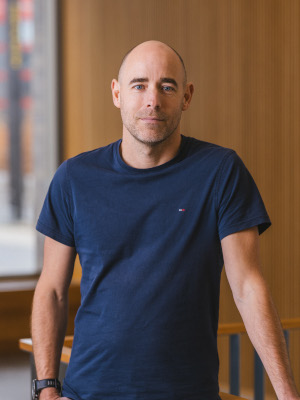
Led by Dr Nicolas Boscher, Head of the Plasma and Vapor Deposition Processes research group at LIST, SUN2CN is a Horizon Europe project funded by the European Innovation Council under the EIC Pathfinder Challenge programme. The project received close to €4 million in EU funding and runs from 1 November 2025 to 31 October 2029. LIST, as the consortium coordinator, has received around €1.23 million of the EU contribution.
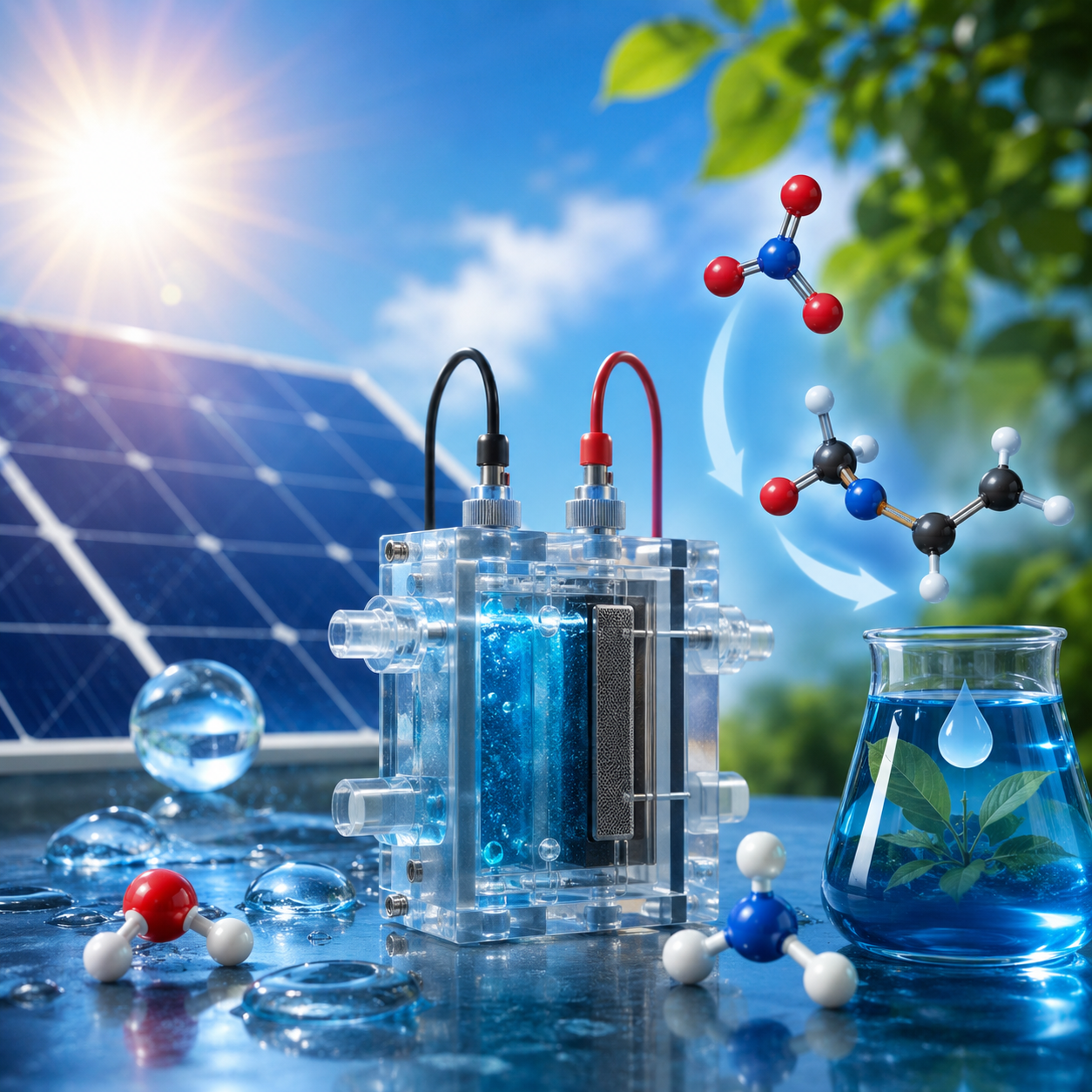
The project’s ambition is to develop a standalone Solar-to-X device capable of converting low-energy molecules such as water, nitrates and CO₂ into valuable carbon-nitrogen chemicals, including compounds relevant to agriculture and the pharmaceutical industry. The device will combine photovoltaic and electrochemical technologies in an integrated flow-cell design, using sunlight as the only energy source.
A first step has now been reached within the project. According to Dr Nicolas Boscher, the team has obtained a highly promising electrocatalyst result for the conversion of nitrates and water into ammonia, an important intermediate step before moving towards the more complex target of combining nitrates, water and CO₂. The result shows very high selectivity and yield and is considered by the team as a strong early breakthrough.
“This first result is very encouraging because it shows that we can efficiently combine nitrogen and hydrogen originating from nitrates and water, respectively,” said Dr Boscher. “The next step will be to introduce CO₂ and move closer to the central SUN2CN objective.”
Addressing a major energy and emissions challenge
The project addresses a major challenge in chemical production. Today, producing ammonia and related chemicals remains highly energy-intensive and largely dependent on fossil resources. SUN2CN aims to explore a more sustainable route by using local waste streams and solar energy to support decentralised production of valuable chemicals and wastewater treatment.
SUN2CN brings together LIST, the University of Twente, the University of Montpellier and the Centre National de la Recherche Scientifique (CNRS), the University of Limerick, and two SMEs: BTG Biomass Technology Group and Redoxme AB. The consortium combines expertise in nano- and microfabrication, electrocatalyst design, photo/electrocatalytic conversion, modelling, device development and environmental assessment.
Building momentum within the EIC Solar-to-X portfolio
The project is part of the EIC Pathfinder “Solar-to-X” portfolio. In March 2026, SUN2CN representatives also took part in the EIC event “Scaling Renewable Fuels and Chemicals for a Resilient European Industry” in Brussels, alongside other projects funded under the same portfolio. “This was an excellent opportunity for us to exchange insights and explore possibilities for collaboration within the portfolio activities,” added Dr Boscher.
For LIST, the project builds on existing expertise in plasma and vapour deposition processes and follows earlier work on solar-driven hydrogen production in the framework of the ERC Consolidator Grant project CLEANH2. With SUN2CN, the ambition is to go one step further: moving from hydrogen production towards the direct production of higher-value chemicals.