



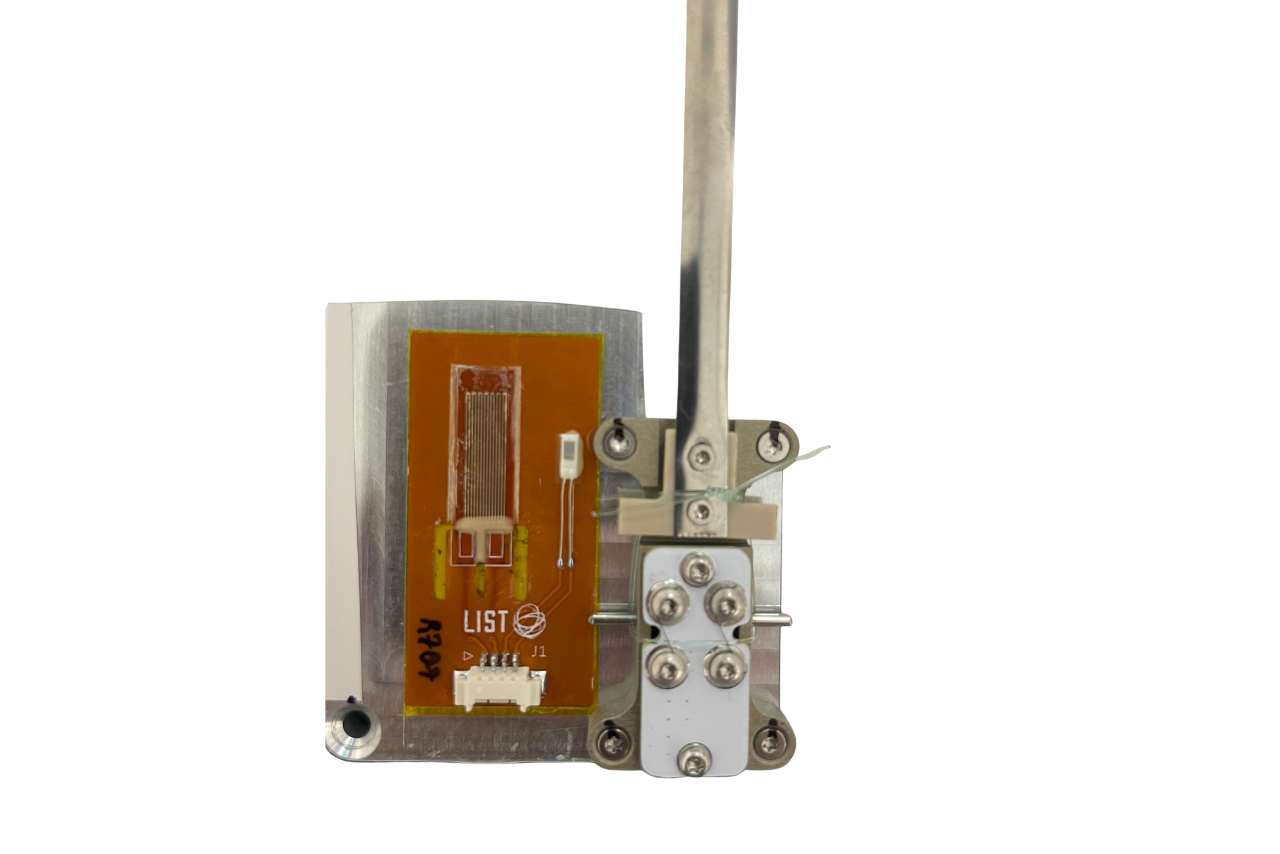
The SPiN-2 mission, coordinated by SPiN (Space Products and iNnovation GmbH), sent a 3U CubeSat into orbit to test new technologies developed in Europe, including a key contribution from the Luxembourg Institute of Science and Technology (LIST).
The satellite is flying in a Sun-Synchronous Orbit (SSO) between 500 and 600 kilometres above Earth. Its main mission is expected to last around six months, with the possibility of extending operations for up to a year.
A compact satellite built for next-gen space testing
SPiN-2 satellite is based on a 3U CubeSat platform, roughly the size of a shoebox. On board, one part of the payload carries an advanced optical system developed by ARCA Dynamics. This system is designed to take images in space and test new ways of observing objects in orbit.
To make the systems in the payload working smoothly within the satellite, the mission relies on SPiN's own multipurpose adapter generic interface connector, a small piece of hardware and software that connects every electronic part of the satellite together. LIST plays a crucial role here as the institute’s directly printed sensors are integrated into this interface to monitor the satellite’s condition while it operates in space.
Printed sensors ready for space
LIST is contributing on the other part of the payload by a new type of flexible sensors manufactured using its in-house printing technologies developed by Sebastjan Glinsek. These sensors are printed directly onto thin surfaces, making them extremely light and easy to adapt to different shapes of spacecraft components.
On SPiN-2 mission, LIST’s sensors will monitor temperature changes on the satellite, help track how parts of the spacecraft behave during the mission for health monitoring, and how the sensors will survive the extreme conditions of high vacuum, temperature, and cosmic radiation in space.
For LIST, this flight marks the first time its printed sensors are tested in space. It is an important step toward proving that these lightweight, adaptable sensors can support future satellites and other high-tech applications. LIST is demonstrating its excellence in additive manufacturing of sensors and taking a new step forward: from innovation on Earth to validation in Space!
“This mission is a turning point for us,” says Jérôme Polesel, Technology & Innovation Manager. “The printed sensors developed by Sebastjan Glinsek will operate in space, and it shows how far our technology has come. SPiN-2 mission will give us valuable insights and help us prepare for future missions.”
The mission brings together several leading European actors, including SPiN (Space Products and iNnovation GmbH), ARCA Dynamics, the Luxembourg Institute of Science and Technology (LIST), German Orbital Systems GmbH, and ExoLaunch.
Supported by the European Space Agency (ESA) through the ScaleUp INVEST Programme and funded by the Luxembourg Space Agency (LSA), SPiN-2 is an example of accelerating valorisation in the space industry.